
In this guide
Match the sensor to the question
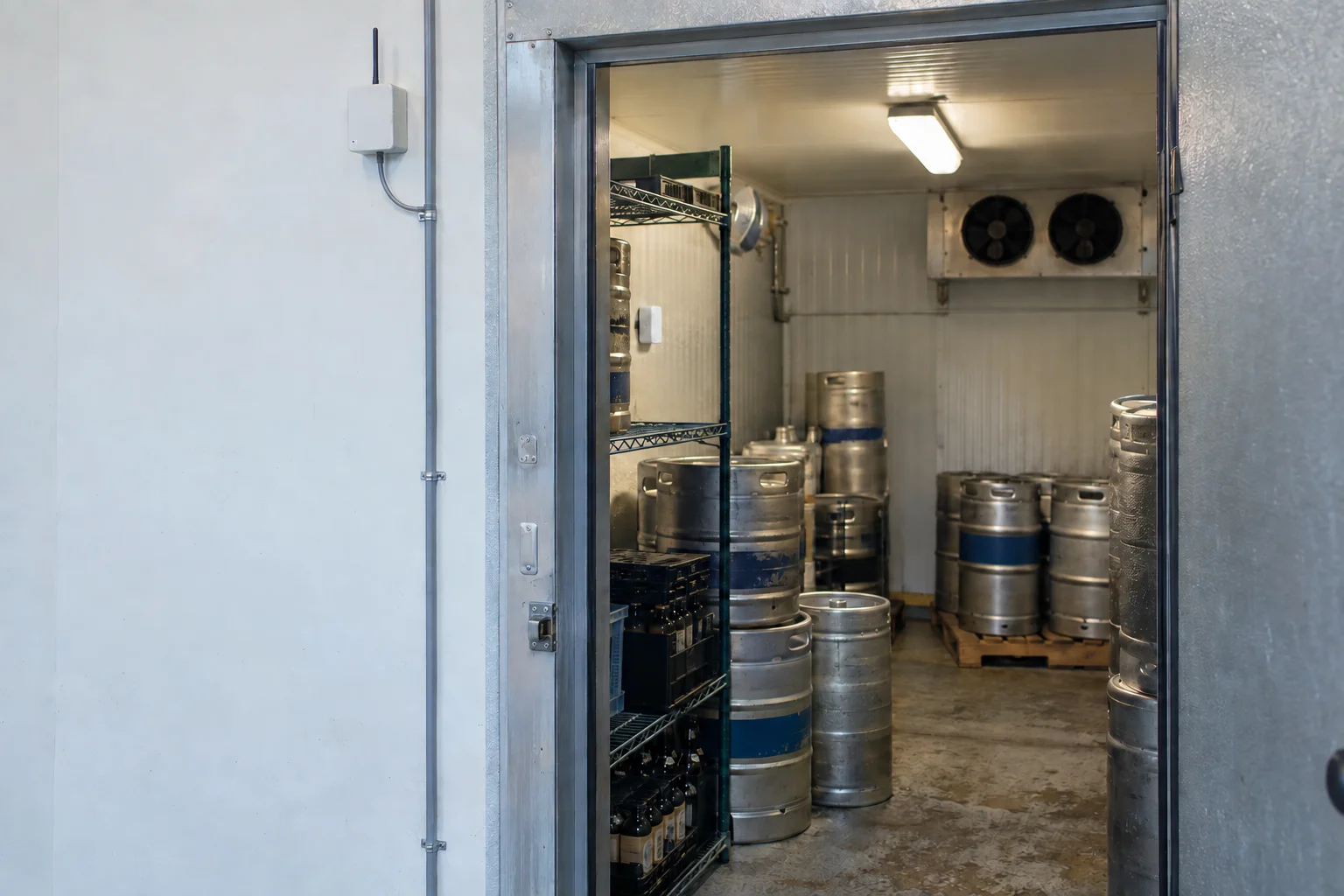
If you need to know whether a door is open, discuss a suitable door contact and its mounting requirements. If you need to know the temperature in a cold room, choose an appropriate temperature sensor or probe. A cable shown near a door does not tell you which measurement a device provides.
Install each part correctly
Door-contact components need the alignment and spacing specified for the selected product. A temperature probe needs a placement and cable route appropriate to the measurement. Confirm both designs with the installer so normal door operation, seals, and cleaning remain practical.
Use the readings together carefully
An extended door opening may help explain a temperature change, but timing and report intervals matter. Compare timestamps and the actual operating routine before assigning a cause. Equipment behavior, loading, and sensor placement may also affect the observed temperature.
Give alerts distinct instructions
A door-left-open notification and a temperature-out-of-range notification can require different first steps. Name each alert clearly and decide who checks it. If both are included, test them separately through the gateway and platform rather than assuming one successful sensor test validates the other.
PUT IT TO WORK
Your planning checklist
- Specify the measurement needed.
- Confirm mounting and probe routing.
- Compare timestamps before inferring a cause.
- Test each sensor and alert separately.
Planning archive: May 2026 topic. Written and first published September 26, 2026 as part of a retrospective collection, not published in May 2026. About the library.